
Introduction
Modern customers rarely interact with a business through just one digital channel. A reliable digital marketing agency helps businesses connect different online channels to reach potential customers, build brand visibility and generate enquiries.
A potential customer may discover a brand through social media, search for its services on Google, visit its website, compare alternatives and eventually convert through a paid advertisement or direct enquiry.
This makes integrated digital marketing increasingly important.
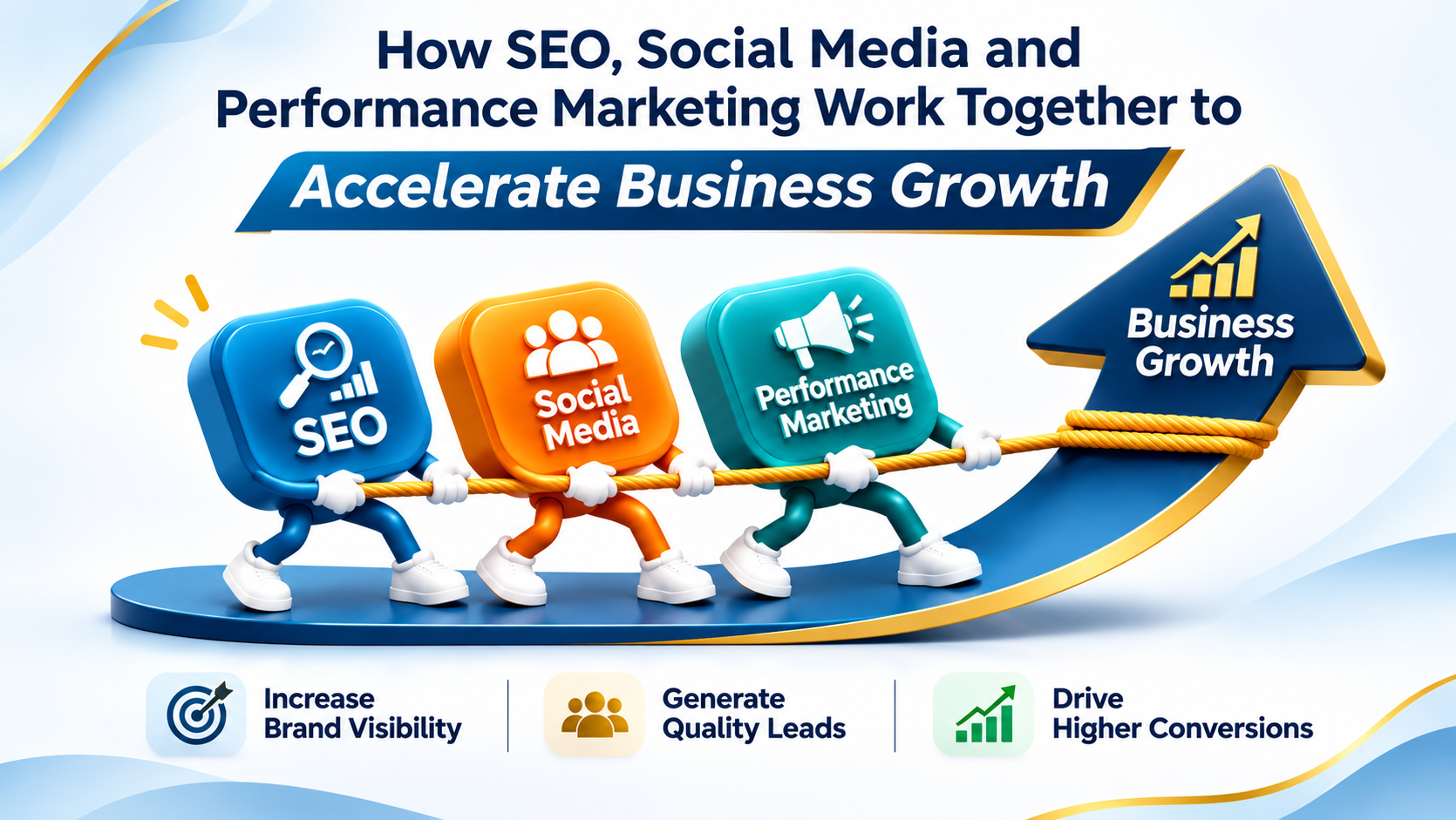
Instead of treating SEO, social media and paid advertising as separate activities, businesses should connect these channels through a unified marketing strategy.
1. Why Businesses Need an Integrated Digital Marketing Strategy
Running individual campaigns without a shared strategy can create inconsistent messaging and inefficient marketing investment.
An integrated strategy helps businesses:
- Maintain consistent brand communication.
- Reach audiences across multiple channels.
- Improve customer journey visibility.
- Support lead generation.
- Use marketing data more effectively.
- Build stronger brand recognition.
2. The Role of SEO in Sustainable Growth
SEO helps businesses attract visitors through organic search.
It involves:
- Keyword research.
- Technical SEO.
- On-page optimization.
- Content development.
- Internal linking.
- Website performance.
- Authority development.
For example, a company offering business consulting may publish helpful resources around relevant business challenges and optimize its service pages for commercial search terms.
3. The Role of Social Media Marketing
Social media supports brand discovery, engagement and communication.
Businesses can use platforms such as LinkedIn, Instagram and Facebook to:
- Share industry insights.
- Publish educational content.
- Showcase products and services.
- Build customer relationships.
- Distribute website content.
- Strengthen brand identity.
4. The Role of Performance Marketing
Performance marketing helps businesses reach relevant audiences through paid advertising.
Google Ads can capture existing search demand, while Meta Ads can introduce products and services to potential customers.
Paid campaigns can also help businesses test offers, messaging and audience segments.
5. How the Three Channels Work Together
Consider a B2B company launching a new professional service.
Step 1: SEO
Develop service pages and informative articles targeting relevant search queries.
Step 2: Social Media
Share insights, educational posts and industry commentary to build awareness.
Step 3: Performance Marketing
Launch Google Ads campaigns targeting high-intent searches and use appropriate social advertising to reach relevant audiences.
Step 4: Website Optimization
Create focused landing pages with clear messaging and enquiry options.
Step 5: Measurement
Analyze website traffic, qualified leads, conversion rates and acquisition costs.
This approach creates stronger coordination across marketing channels.
6. The Importance of Consistent Brand Messaging
Customers should receive a consistent message regardless of where they interact with your business.
This includes:
- Brand positioning.
- Service descriptions.
- Visual identity.
- Value propositions.
- Offers.
- Calls to action.
Consistency helps build recognition and trust.
7. Measuring Integrated Marketing Performance
Businesses should evaluate the performance of individual channels and the overall customer journey.
Useful metrics include:
- Organic search traffic.
- Paid advertising conversions.
- Social media engagement.
- Qualified leads.
- Website conversion rate.
- Customer acquisition cost.
- Marketing-attributed revenue.
Attribution should be interpreted carefully because different channels may influence the same customer journey.
Conclusion
SEO, social media and performance marketing are more powerful when they support a shared business objective.
SEO builds organic discoverability, social media strengthens engagement and paid advertising provides additional opportunities to reach potential customers.
Together, these channels can create a connected digital marketing ecosystem.
CrazyChiefs helps businesses integrate SEO, social media, performance marketing, content and website development into coordinated digital growth strategies.
Businesses looking for professional support can partner with a reliable digital marketing agency to build a coordinated digital marketing strategy and accelerate business growth.
Frequently Asked Questions
Q1. What is integrated digital marketing?
It is an approach that connects multiple marketing channels under one coordinated strategy.
Q2. Why should SEO and social media work together?
SEO attracts search-driven traffic, while social media supports content discovery, engagement and brand communication.
Q3. Does performance marketing support SEO?
Paid campaigns can provide useful market and conversion insights, but buying ads does not directly improve organic search rankings.
Q4. Which digital marketing channel should businesses start with?
The starting point depends on customer behaviour, business objectives, available budget and market demand.
Q5. What is the biggest advantage of integrated marketing?
It creates more consistent communication and helps businesses coordinate different channels throughout the customer journey.

Comments are closed