
Every startup founder has heard some version of the same advice “just focus on product, marketing can wait.” It sounds reasonable until the product is actually built, the runway is ticking down, and nobody outside a small circle of early believers knows the company exists. This is usually the exact point where founders start looking for a digital marketing agency for startups India, and honestly, most wish they’d started that search a little earlier.
Why Startups Can’t Just Use the Same Playbook as Bigger Businesses
Most marketing advice online is written for established businesses with steady budgets and predictable growth curves. Startups don’t have that luxury. There’s limited runway, investor expectations to manage, and a genuine need to show traction fast, not eventually. A generic agency used to working with stable local businesses often doesn’t quite understand this urgency, which is exactly why founders specifically go looking for a digital marketing agency for startups India that’s actually built its processes around this kind of pressure.
The difference isn’t just speed, either. Startups also need marketing that’s flexible enough to pivot when the product or positioning changes, which happens far more often in early-stage companies than most agencies are used to handling smoothly.
What Startups Actually Need (That They Often Don’t Ask For)
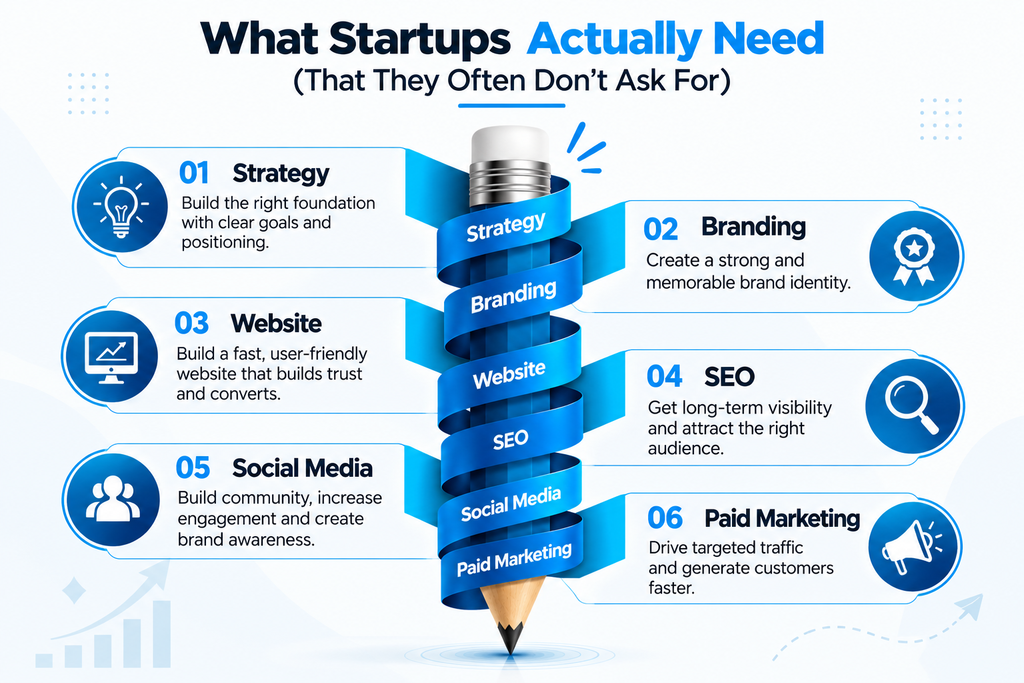
Founders often walk in asking for social media management or a flashy website, when what actually moves the needle early on looks a little different:
- Clear, validated messaging before scaling any paid spend, since throwing budget behind unclear positioning just burns cash faster
- Performance marketing with tight feedback loops, so budget isn’t wasted on channels that clearly aren’t converting
- Founder-led content and credibility building, since early customers and investors often trust a founder’s voice more than a polished brand campaign
- SEO laid early, even if results take months, because startups that start too late end up competing against players with years of accumulated authority
A capable digital marketing agency for startups India should be pointing this out proactively, not just executing whatever the founder initially asks for.
The Budget Reality Nobody Talks About Enough
Startup budgets are tight, and that’s not a weakness to hide from an agency it’s context they need to actually plan around. A good agency working with early-stage companies in India understands that spending has to be sequenced carefully: validate messaging cheaply first, then scale spend once something is clearly working, rather than spreading a small budget thin across five channels at once hoping something sticks. If an agency pushes you toward an expensive, all-channels-at-once package regardless of your stage, that’s usually a sign they’re not genuinely built for startup clients.
Speed vs. Sustainability — Balancing Both
There’s real tension in early-stage marketing between needing fast traction and building something that actually lasts. Paid ads can generate quick signups, but they stop the moment budget runs out. Organic growth through SEO and content takes longer to show up, but keeps compounding long after the initial effort. The right digital marketing agency for startups India doesn’t force you to choose one over the other it sequences both, using paid channels to generate early momentum while organic foundations are quietly being built in the background for when the ad budget inevitably gets tighter.
Questions Founders Should Ask Before Signing On
Before committing, it’s worth directly asking a prospective agency: Have you worked with early-stage startups before, or mostly established businesses? How do you approach messaging validation before scaling spend? What does reporting actually look like, and how often? Can strategy flex if our positioning changes three months in? Founders who ask these questions upfront tend to avoid the frustrating mismatch of hiring an agency that’s simply not built for the pace and uncertainty startups operate in.
Why Founders Choose CrazyChiefs Digital for This Stage
We’ve worked with enough early-stage teams to know that startup marketing isn’t just “smaller business marketing” it needs a different rhythm entirely. At CrazyChiefs Digital, our approach leans on exactly what’s described above: validating messaging before scaling spend, running performance marketing with tight feedback loops, and quietly building SEO groundwork early so it’s not a scramble later. If you’re a founder trying to figure out where to start, or which channel actually deserves your limited budget right now, it’s worth just talking it through reach out to our team and we’ll map out what makes sense for where your startup actually is today.
Why the Right Timing Matters More Than People Think
Founders often wait until after a funding round to invest in marketing, assuming it’s a “later” problem. But building even a lightweight foundation early clear messaging, some organic groundwork, a basic performance marketing test makes that eventual scale-up dramatically smoother. A startup that partners with the right digital marketing agency for startups India early on isn’t just buying marketing services; it’s buying itself a head start that’s genuinely hard to replicate once competitors have already claimed that early mindshare.
Frequently Asked Questions
Q1. When should a startup actually start working with a digital marketing agency?
Ideally as soon as the product or service is ready for real users, even with a lightweight strategy, rather than waiting until after a funding round.
Q2. Do startups need a different approach compared to established businesses?
Yes, startups typically need tighter budgets, faster feedback loops, and more flexibility to pivot messaging as the product or market understanding evolves.
Q3. Should startups prioritise paid ads or SEO first?
Most benefit from a mix paid ads for quicker early traction, alongside SEO groundwork that compounds over time and reduces dependency on ad spend later.
Q4. How can a founder tell if an agency genuinely understands startups?
Ask about their experience with early-stage companies specifically, and see if they emphasise validating messaging before scaling spend, rather than pushing a generic, one-size-fits-all package.

Comments are closed