
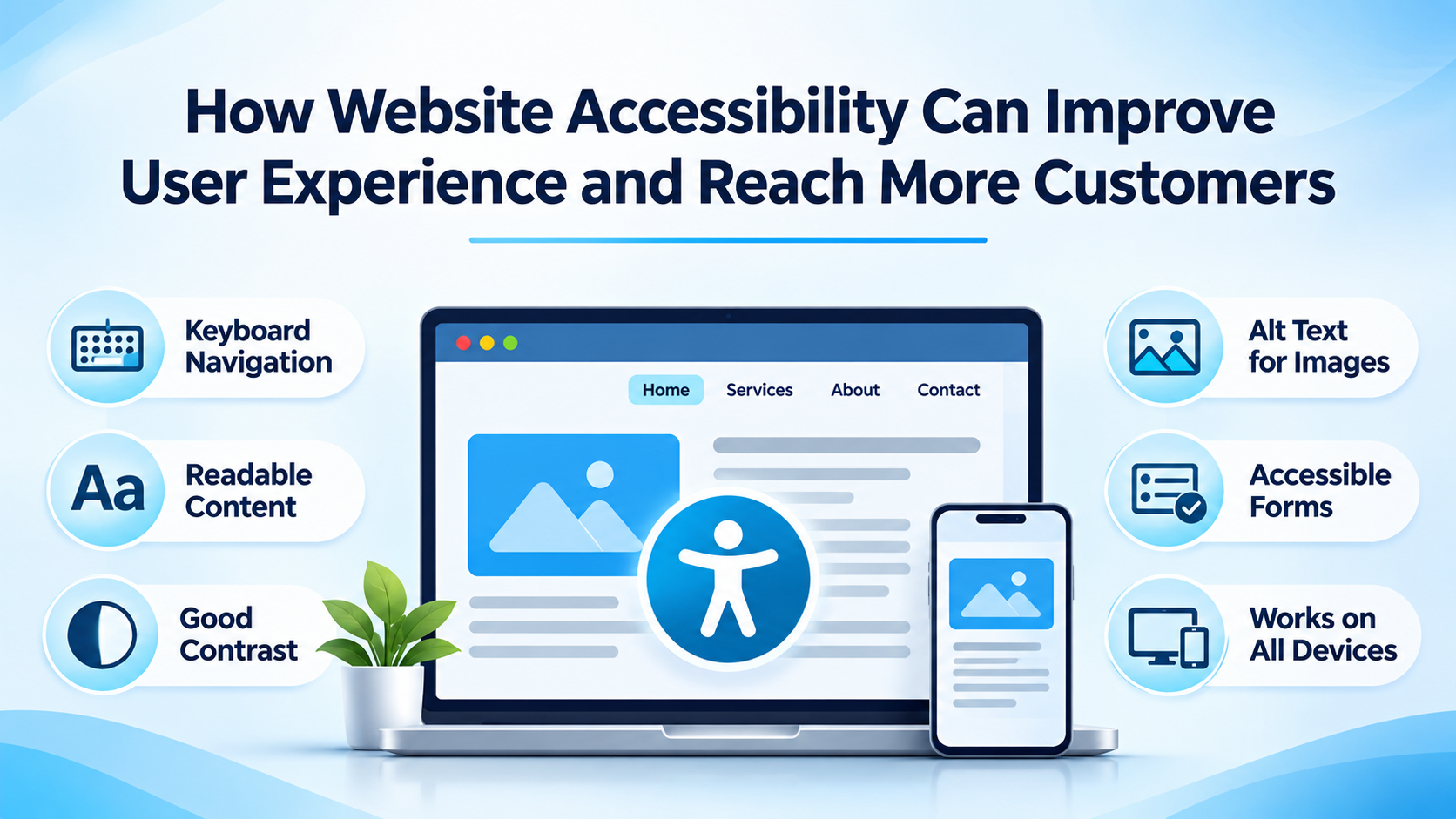
Have you ever visited a website where the text was difficult to read, buttons were hard to click, or navigation simply did not make sense? Imagine how many potential customers might leave your website because they experience similar difficulties. Website accessibility is not just about meeting technical standards; it is about making your website easier for more people to use. Effective Website Development can help businesses create more accessible, user-friendly and inclusive digital experiences that reach a wider audience.
Many businesses focus on visual design, branding and functionality while overlooking accessibility. But even small usability barriers can affect how visitors interact with your website, explore your services or complete an enquiry.
So, could your website be unintentionally making it difficult for potential customers to connect with your business?
1. Can Every Visitor Easily Navigate Your Website?
A website may look attractive, but appearance alone does not guarantee a good user experience.
Some visitors may navigate using keyboards rather than a mouse. Others may rely on assistive technologies or need simpler navigation to understand where they are on a website.
If menus, buttons or navigation elements are difficult to use, visitors may leave without exploring your services.
A website that is easy to navigate creates a more welcoming experience for a wider range of users.
2. Is Your Website Content Easy to Read?
Small fonts, low contrast and poorly structured content can make reading difficult for many visitors.
Imagine a potential customer trying to understand your service details but struggling to read the text or identify important information.
Accessible content often starts with clear headings, readable typography, sufficient colour contrast and a well-organised page layout.
Sometimes, improving readability can make a website feel significantly easier to use.
3. Are Your Images Communicating the Right Information?
Images are an important part of website design, but not every visitor experiences them in the same way.
Meaningful alternative text can help screen-reader users understand relevant image content. However, poorly written alt text or missing descriptions may leave important information inaccessible.
Are the images on your website helping visitors understand your business, or are some users missing important context?
4. Could Difficult Forms Be Costing You Potential Customers?
Contact forms, enquiry forms and registration forms are often important conversion points.
But what happens when a visitor cannot understand which field needs to be completed, cannot identify an error or struggles to navigate the form?
Confusing form layouts and unclear instructions can create unnecessary barriers.
A more accessible form experience can make it easier for visitors to complete actions and connect with your business.
5. Does Your Website Work Across Different Devices?
Visitors may access your website using desktops, tablets, smartphones or different browsers.
If content overlaps, buttons become difficult to click or layouts break on smaller screens, the experience may become frustrating.
Responsive design and accessibility often complement each other. A well-structured website can help users navigate and interact with content more comfortably across different devices.
But simply making a website responsive does not automatically make it accessible.
6. Are Your Buttons and Links Easy to Understand?
Generic labels such as “Click Here” or unclear button text may not provide enough context for visitors.
Clear and descriptive links help users understand where a button will take them or what action they are expected to perform.
When website elements are designed with clarity in mind, visitors can navigate more confidently and make decisions more easily.
7. Is Your Website Creating Unnecessary Barriers?
Accessibility issues are not always obvious to website owners.
A design element that appears perfectly functional during a quick review may create difficulties for someone using a screen reader, keyboard navigation or other assistive technology.
This is why accessibility requires more than simply looking at a website and deciding that it appears fine.
Understanding how different people interact with your website can reveal opportunities that might otherwise remain unnoticed.
Why Website Accessibility Should Be Part of Your Digital Strategy
Website accessibility is not simply a design trend. It is an important consideration for businesses that want to create more inclusive digital experiences, improve usability and make their online presence easier to navigate.
At CrazyChiefs, we believe a website should do more than look impressive. It should provide a meaningful experience for the people who visit it.
Our approach to website development focuses on creating digital experiences that combine design, functionality, user experience and business objectives. By considering how visitors interact with different website elements, businesses can identify opportunities to make their websites more accessible and user-friendly.
Accessibility also needs to be considered throughout the design and development process rather than treated as an afterthought. From website structure and navigation to content readability and interactive elements, small improvements can contribute to a better overall experience.
Could Your Website Be Reaching More People?
Your website may already be attracting visitors, but are all of them able to use it comfortably?
Accessibility challenges can sometimes remain hidden until someone experiences them firsthand. Reviewing your website’s navigation, content, forms, images and interactive elements can help uncover areas that need attention.
Investing in professional Website Development can help businesses create more user-friendly digital experiences while considering accessibility, responsive design and functionality.
At CrazyChiefs Digital Marketing Agency, we help businesses think beyond visual design and focus on building websites that support better user experiences and business growth.
Your website should not create barriers between your business and potential customers. Contact CrazyChiefs to explore how your website can become more accessible, user-friendly and effective.
Frequently Asked Questions
1. What is website accessibility?
Website accessibility refers to designing and developing websites so that people with different abilities can navigate, understand and interact with digital content.
2. Why is website accessibility important for businesses?
Website accessibility can help businesses create more inclusive user experiences, improve usability and make website content and services easier to access for a wider audience.
3. Does website accessibility improve SEO?
Some accessibility practices, such as descriptive alt text, clear headings, descriptive links and well-organised content, can also support SEO and usability. However, accessibility and SEO are not the same, and accessibility alone does not guarantee better rankings.
4. What are common website accessibility issues?
Common issues include low colour contrast, missing image alt text, unclear navigation, inaccessible forms, keyboard navigation problems and poorly structured content.
5. How can businesses improve website accessibility?
Businesses can review their website structure, improve content readability, provide meaningful alt text, make forms easier to use, support keyboard navigation and evaluate accessibility against recognised standards such as WCAG.

Comments are closed