
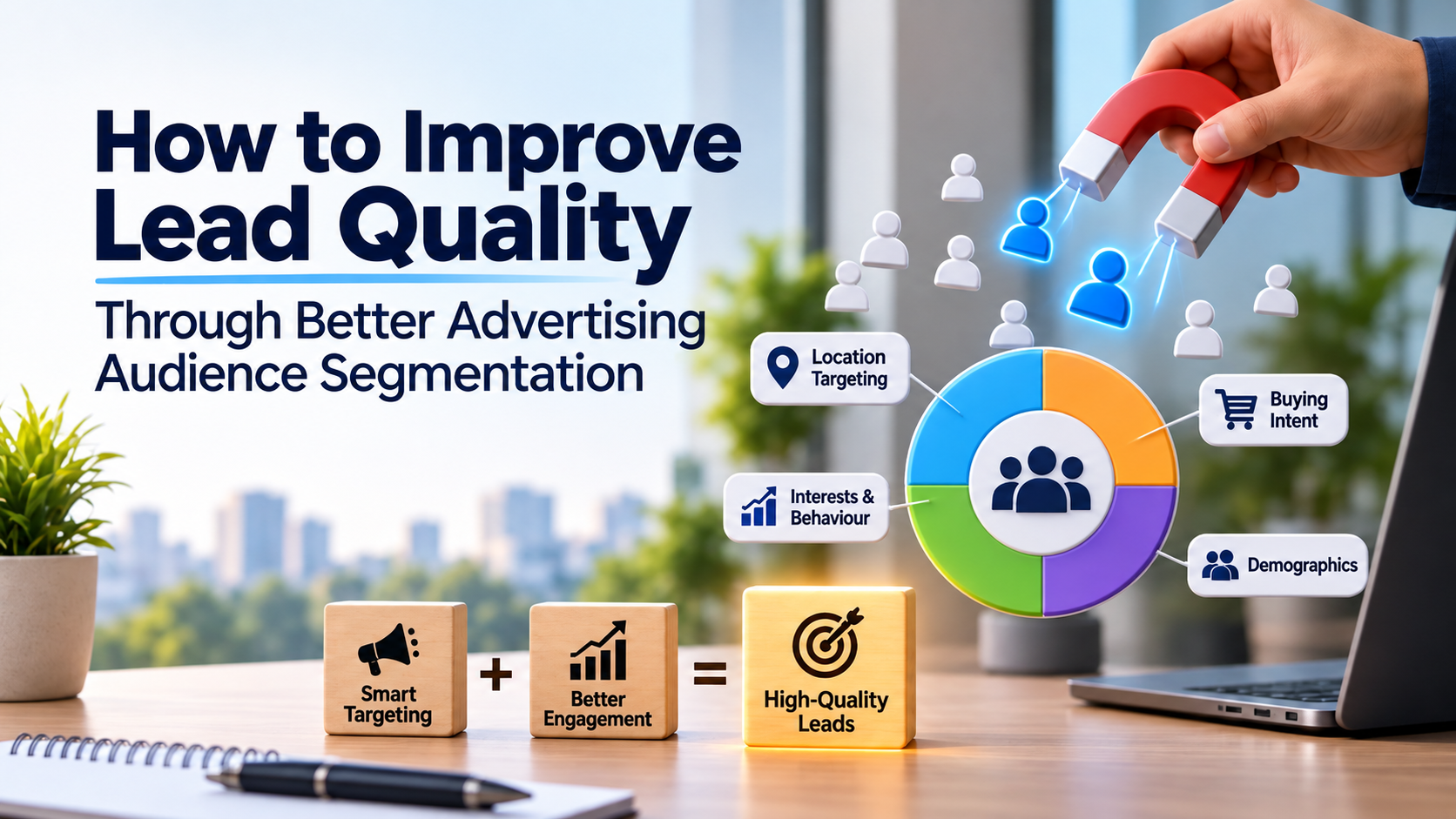
Are your advertising campaigns generating plenty of leads but very few potential customers who are actually interested in your products or services? You might be attracting the wrong audience. Getting more enquiries does not always mean getting better business opportunities. With the right performance marketing strategy, businesses can focus on reaching people who are more likely to engage, enquire and become customers.
One of the biggest challenges in digital advertising is not simply generating leads but attracting the right people. Poor audience targeting can waste advertising budgets, increase acquisition costs and leave sales teams dealing with enquiries that rarely convert.
So, what could be going wrong with your advertising audience? Let’s explore.
1. Are You Targeting Everyone Instead of Your Ideal Customers?
Trying to reach everyone may seem like a way to increase visibility, but it can often attract people who have little interest in your offering.
Your ideal customers have specific needs, interests, locations and buying intentions. If your advertising campaigns do not consider these differences, your budget may be spent reaching people who are unlikely to become customers.
The real question is: Does your current audience match the customers your business actually wants?
2. Are Your Audience Interests Too Broad?
Selecting broad interests and demographic categories may help increase reach, but more reach does not automatically mean better leads.
For example, someone interested in digital technology may not necessarily be looking for digital marketing services.
Audience interests should be connected to your actual products, services and customer requirements. Otherwise, your campaigns could generate activity without delivering meaningful business opportunities.
3. Are You Ignoring Your Existing Customer Data?
Your existing customers can provide valuable insights into the type of audience your business should target.
Their interests, locations, purchasing behaviour and engagement patterns can help identify characteristics shared by people who are more likely to convert.
But are you using this information to improve your advertising campaigns, or are you continuously targeting new audiences without learning from previous results?
4. Are You Targeting People at the Wrong Buying Stage?
Not everyone who sees your advertisement is ready to purchase.
Some people are discovering your business for the first time, while others may already be comparing solutions or preparing to make a decision.
Showing the same advertisement to every audience can reduce its effectiveness. Different stages of the customer journey require different messages and approaches.
Understanding this difference can help businesses connect with potential customers more meaningfully.
5. Are Your Location Settings Attracting Irrelevant Leads?
Location targeting becomes especially important for businesses that serve specific regions or markets.
If your advertising settings are too broad, your campaigns may attract enquiries from locations where your business cannot provide its services.
International businesses also need to consider differences in markets, customer expectations and regional demand.
A closer look at location-based audience performance may reveal why some leads are simply not relevant.
6. Are You Reaching the Same Audience Repeatedly?
Showing advertisements repeatedly to the same people without adjusting your strategy can lead to audience fatigue.
Over time, users may become less responsive to your advertisements, while campaign costs and engagement patterns may change.
A balanced approach to audience segmentation, exclusions and remarketing can help businesses avoid unnecessary repetition and improve campaign efficiency.
7. Are Your Campaigns Using the Wrong Audience Signals?
Advertising platforms provide several ways to understand and reach potential customers, including interests, demographics, website interactions and customer data.
However, using audience signals without understanding their relevance can create misleading results.
A campaign might generate inexpensive leads, but are those leads actually interested in becoming customers?
This is why campaign performance should be evaluated beyond the number of form submissions.
8. Are You Measuring Lead Quality or Just Lead Quantity?
A high number of leads may look impressive in an advertising dashboard, but it does not necessarily reflect business success.
Businesses should also pay attention to qualified enquiries, sales conversations, conversion rates and customer acquisition costs.
Without connecting advertising results with actual business outcomes, it becomes difficult to identify which audience segments are delivering real value.
9. Are Your Ad Creatives Attracting the Wrong People?
Your advertisement does more than promote a product or service. It also influences the type of people who respond to your campaign.
If the messaging is too generic, it may attract people who are curious but have no genuine buying interest.
Clear messaging about your offering, intended audience and value proposition can help set the right expectations before someone clicks or submits an enquiry.
Sometimes, the problem is not only who you target but also what your advertisement communicates.
10. Are You Regularly Reviewing and Refining Audience Segments?
Audience behaviour changes over time. A segment that performed well several months ago may not deliver the same results today.
Businesses that continue using the same targeting approach without reviewing campaign data may miss opportunities to improve lead quality.
Regular performance analysis, audience testing and optimisation can help identify which segments deserve more attention and which ones need adjustments.
Why Does Performance Marketing Need a Smarter Audience Strategy?
Successful advertising is not simply about increasing impressions, clicks or form submissions. It is about connecting the right message with the right audience at the right time.
This requires more than selecting a few interests inside an advertising platform. Audience segmentation, campaign creatives, landing pages, conversion tracking and performance analysis all need to work together.
At CrazyChiefs, we believe that digital marketing should be driven by meaningful results rather than numbers that only look impressive in reports.
Our approach combines creative thinking with data-driven campaign planning to help businesses understand their audiences, identify targeting opportunities and make more informed advertising decisions.
Rather than relying on a one-size-fits-all approach, CrazyChiefs focuses on understanding individual business objectives and developing strategies that support better campaign performance.
Getting Leads but Not the Right Customers?
If your advertising campaigns are generating enquiries but struggling to attract qualified prospects, your audience strategy may need a closer look.
The right performance marketing approach can help businesses identify relevant audience segments, reduce wasted advertising spend and focus on opportunities that have greater potential to convert.
At CrazyChiefs Digital Marketing Agency, we look beyond basic campaign metrics to understand what is actually happening behind your advertising results. From audience segmentation and campaign optimisation to performance analysis, our team helps businesses work towards more meaningful marketing outcomes.
Stop focusing only on how many leads you generate. Start focusing on who those leads are. Contact CrazyChiefs and explore a smarter approach to advertising performance.
Frequently Asked Questions
1. What is audience segmentation in digital advertising?
Audience segmentation is the process of dividing potential customers into smaller groups based on factors such as demographics, interests, location, behaviour and buying intent.
2. How does audience segmentation improve lead quality?
It helps businesses focus their advertising on people who are more relevant to their products or services, potentially increasing the chances of receiving qualified enquiries.
3. Why are my advertising campaigns generating low-quality leads?
Possible reasons include broad targeting, unclear ad messaging, incorrect location settings, poor audience research or a mismatch between advertisements and landing pages.
4. Which advertising platforms support audience segmentation?
Platforms such as Google Ads, Meta Ads and LinkedIn Ads offer different audience targeting and segmentation capabilities, depending on campaign objectives and available data.
5. How often should businesses review their advertising audiences?
Businesses should monitor campaign performance regularly and review audience segments whenever lead quality, conversion rates or campaign efficiency changes.

Comments are closed