
Introduction
When potential customers search online for a product or service, businesses that appear prominently in relevant search results have an opportunity to attract their attention.
However, achieving sustainable organic visibility requires more than adding keywords to website pages.
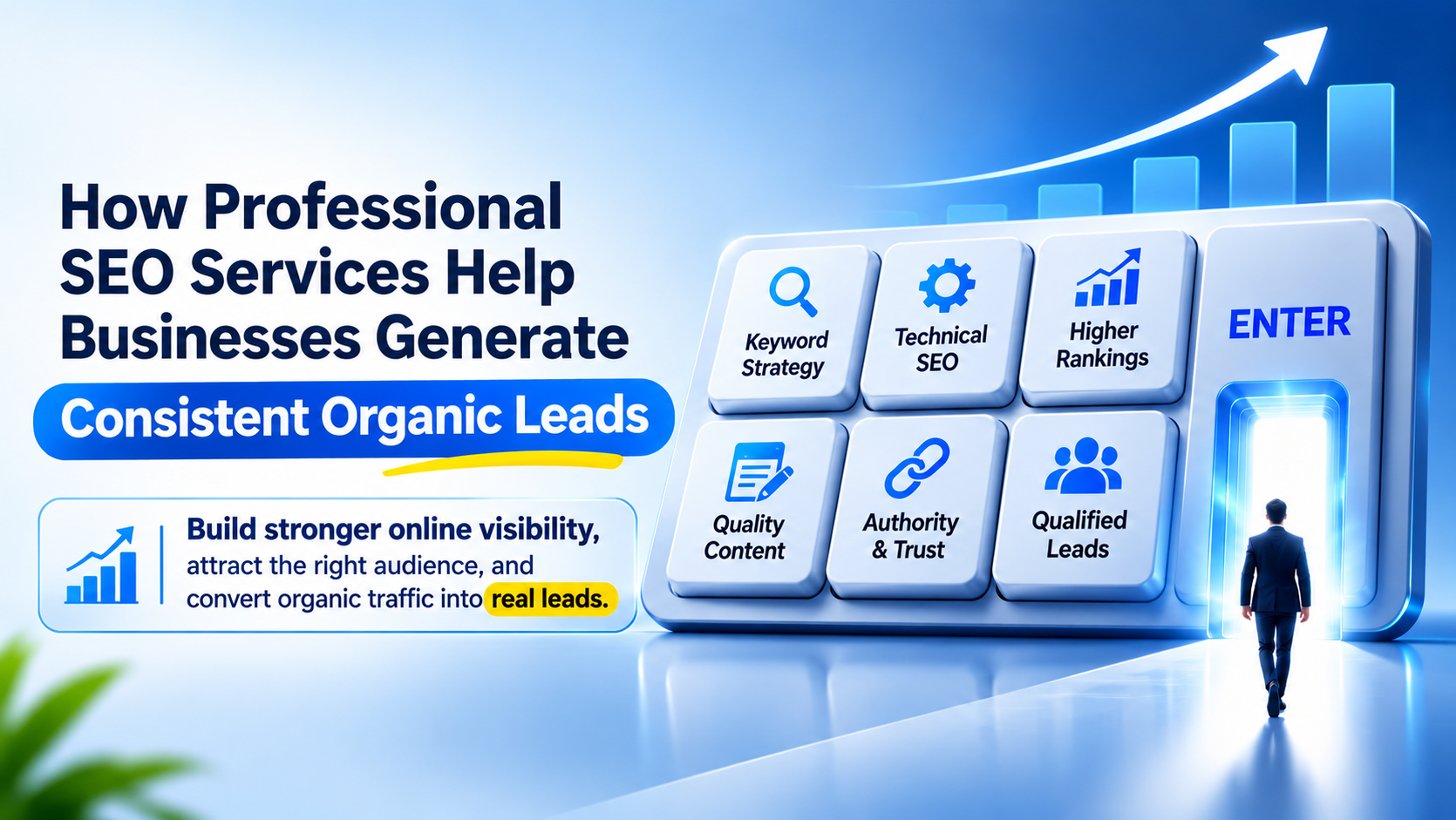
Professional SEO services involve improving technical performance, website content, search relevance, user experience and overall online authority.
For businesses looking to reduce dependence on paid advertising and build a consistent source of qualified website traffic, SEO can become an important long-term growth investment.
1. Understanding How SEO Generates Business Leads
SEO connects businesses with people actively searching for relevant products, services or solutions.
For example, a company offering website development services may want to appear for searches such as:
- Website development company.
- Professional website development services.
- Business website design.
- E-commerce website development.
By targeting relevant search intent, businesses can attract visitors who are more likely to become potential customers.
If you want to understand how businesses can turn website visitors into genuine enquiries, read our article on Lead Generation SEO Company: How SEO Brings Enquiries, Not Just Traffic.
2. Keyword Research: Building the Foundation
Keyword research identifies the phrases potential customers use when searching online.
A professional SEO strategy should consider:
- Commercial keywords: Searches indicating an interest in purchasing services.
- Informational keywords: Searches looking for explanations or solutions.
- Transactional keywords: Searches demonstrating stronger purchase intent.
- Local keywords: Searches associated with a specific geographical area.
Keyword selection should consider relevance, search demand, competition and business value.
3. Technical SEO: Improving Website Performance
Technical SEO helps search engines discover, crawl and understand website content.
Important activities include:
- Improving website loading performance.
- Fixing crawl and indexing issues.
- Creating XML sitemaps.
- Implementing canonical tags.
- Optimizing mobile usability.
- Resolving broken links.
- Improving website architecture.
- Implementing appropriate structured data.
A technically sound website provides a stronger foundation for organic growth.
4. On-Page SEO: Making Website Content More Relevant
On-page optimization improves how individual pages communicate their relevance.
Key elements include:
- SEO titles.
- Meta descriptions.
- Heading structures.
- Keyword placement.
- Image alt text.
- Internal links.
- Content quality.
- Search intent alignment.
Each important service page should address a specific customer need instead of targeting unrelated keywords.
5. Content Marketing and Topical Authority
Search engines aim to deliver useful and relevant information.
Businesses can demonstrate expertise by publishing content that answers genuine customer questions.
For example, a digital marketing agency can create articles about:
- SEO strategy.
- Website conversion optimization.
- Performance marketing.
- Social media growth.
- Digital advertising.
- Marketing automation.
Publishing interconnected, useful content helps establish topical relevance.
6. Local and International SEO
Businesses targeting multiple markets need a geographical SEO strategy.
Local SEO focuses on visibility within specific locations, while international SEO helps businesses target audiences across countries and languages.
International SEO may involve:
- Country-specific keyword research.
- Localized content.
- Appropriate URL structures.
- Hreflang implementation where relevant.
- International business information.
- Market-specific landing pages.
Businesses should avoid simply duplicating content and replacing country names.
7. Measuring SEO Performance
SEO should be evaluated using meaningful performance indicators.
Key Performance Indicators (KPIs):
- Organic clicks: Visitors arriving through organic search.
- Search impressions: How frequently pages appear in search.
- Keyword visibility: Performance for target search terms.
- Organic conversions: Leads and sales from organic traffic.
- Engagement: How visitors interact with content.
- Technical health: Website crawl and indexing performance.
Google Search Console and Google Analytics 4 can help businesses understand their organic performance.
Conclusion
Professional SEO services help businesses improve organic visibility, attract relevant website visitors and create opportunities for long-term lead generation.
A successful SEO strategy combines keyword research, technical optimization, quality content, website improvements and continuous performance analysis.
CrazyChiefs provides SEO solutions designed to improve search visibility and connect businesses with relevant audiences across international markets.
Frequently Asked Questions
Q1. What are professional SEO services?
Professional SEO services include keyword research, technical SEO, on-page optimization, content strategy, link development and performance monitoring.
Q2. How long does SEO take to generate leads?
The timeline depends on competition, website condition, industry and investment. SEO typically requires consistent work over several months.
Q3. Is SEO important for small businesses?
Yes. SEO can help small businesses reach relevant audiences without depending entirely on paid advertising.
Q4. What is the difference between local SEO and international SEO?
Local SEO targets customers in specific geographical areas, while international SEO targets audiences across multiple countries or languages.
Q5. Can SEO generate leads without paid advertising?
Yes. Businesses can generate leads through organic search when their website ranks for relevant queries and provides effective conversion opportunities.

Comments are closed